Examples of Inclusive Language
Inclusive language examples offer practical alternatives to words or phrases that may be outdated, exclusionary, or unintentionally harmful. Rather than focusing on “what not to say,” this section emphasizes thoughtful word choices that center respect, dignity, and personhood. By providing examples and alternative language, the goal is to support growth, build confidence, and encourage more intentional communication in everyday conversations, classrooms, and creative spaces.
Addressing a Group
Instead of: “Guys” or “Boys and girls.” ———— Try: “Everyone” or “Folks” or “Class” or “Students” or “Friends”
Using gender-neutral collective terms helps ensure no one is excluded or misgendered and signals that everyone belongs in the space.
Learning and Ability
Instead of: “Low-functioning / high-functioning” or “Normal students” or “Struggling student” ———— Try: “Student with support needs” or “General education students” or “Student who is learning this skill”
This language avoids labeling students by perceived ability and instead recognizes learning as variable, contextual, and supported.
Behavior and Discipline
Instead of: “What’s wrong with you?” or stating “You’re being disruptive.” ———— Try: “What do you need right now?” or “Let’s find a way to help you rejoin the activity.”
Reframing behavior as a need rather than a problem promotes regulation, trust, and re-engagement instead of shame or punishment.
Effort, Growth and Feedback
Instead of: “This is easy.” or “You should know this by now.” — — — — Try: “This might be new for some of us.” or “Let’s walk through it together.”
This wording normalizes learning curves and reduces anxiety by affirming that growth happens at different paces.
Identity and Respect
Instead of asking “Preferred pronouns” or saying “That’s weird.” — — — — Try: “Pronouns” or “That’s different from what I’m used to.”
Using neutral, nonjudgmental language respects self-expression and avoids positioning difference as something abnormal or negative.
Family and Home Life
Instead of: “Tell your mom and dad” or “Parents must sign this.” — — — — Try:“Share this with a trusted adult at home” or “A caregiver signature is needed”
This phrasing acknowledges diverse family structures and avoids assuming all students have the same home dynamics.
Mental Health and Emotions
Instead of: “Calm down.” or “You’re overreacting.” — — — — Try: “I see you’re upset.” or “Let’s take a moment together.”
Validating emotions supports emotional safety and helps individuals feel seen rather than dismissed.
Accessibility and Participation
Instead of: “Everyone must present out loud.” or “Just read what we are going to do.” — — — — Try: “You can present in a way that works for you.” or “You may listen, read, or follow along.”
Offering multiple ways to participate reduces barriers and allows individuals to engage using their strengths.
Classroom Norms and Expectations
Instead of: “Sit still.” or “Use your inside voice.” — — — — Try: “Find a position that helps you focus.” or “Let’s choose a volume that works for this space.”
This language focuses on self-regulation and shared responsibility rather than control or compliance.
Mistakes and Learning
Instead of: “That’s wrong.” or “No, not like that.” — — — — Try: “Let’s try another approach.” or “You’re on the right track.”
Responding to mistakes as part of the learning process encourages persistence and creative problem-solving.
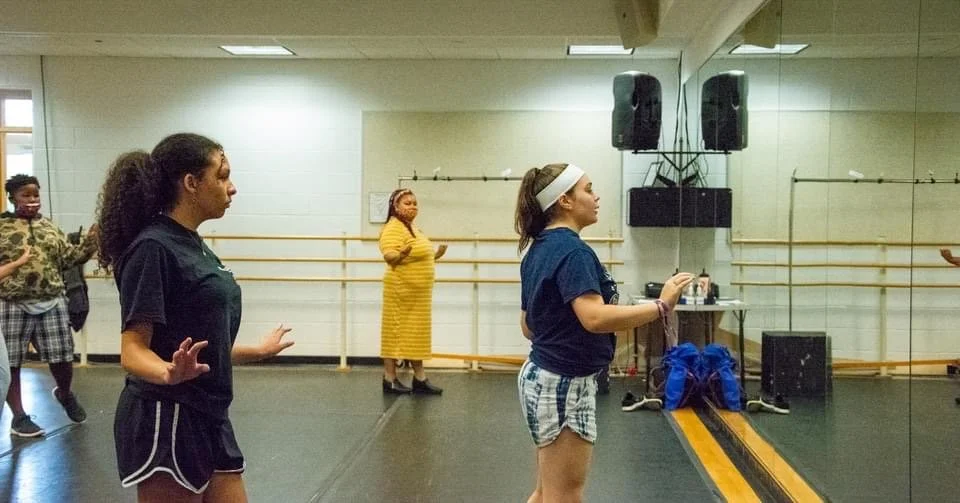
Image from my work at Black Rock Center for the Arts in 2022