Resource Section
This project does not exist because I have all the answers—quite the opposite. The Resources section exists to acknowledge that learning about access and inclusion is ongoing and collective. The materials shared here are sources that have shaped my own understanding, challenged my perspectives, and supported my growth.
By including these resources, I hope to highlight the voices, organizations, and communities that continue to lead this work. This section is an invitation to keep learning, explore beyond this site, and engage with knowledge that comes directly from lived experience, research, and advocacy.
Websites:
ArtStream is a non-profit theatre organization for disabled adults in the DMV. Their mission is, “ Through collaborative performance and lifelong learning opportunities, people with intellectual and developmental disabilities gain the skills and confidence to engage with the world.” - ArtStream
The ADA is a federally funded organization providing comprehensive information, guidance, and training on the Americans with Disabilities Act (ADA) to businesses, governments, and individuals.
“CEL (Center for Enriched Living) is a non-profit organization that promotes disability inclusion. CEL enriches the lives of individuals with developmental disabilities by maximizing opportunities for personal success, fun and friendship, employment, and community involvement. Through curricula in schools nationwide and local programs for teens, adults, and seniors, we support a culture of inclusion from childhood to adulthood.” - Center for Enriched Living
“Students of all abilities are welcome in our classes and our staff works with students and their families to identify and provide the most successful experience for each student. Parents are encouraged to provide complete information on registration forms for classes at Imagination Stage and will be contacted by a member of our Access team to discuss reasonable and respectful accommodations and support strategies. Strategies may include pre-program student/family visits, additional staff support, and continued observation and follow-up.” - Imagination Stage
“We’re on a mission to promote disability inclusion by empowering educators and engaging students and communities. The Nora Project trains and coaches educators and offers a suite of SEL programs that dive deeply into the concepts of empathy and inclusion, explicitly addressing disability and difference as a part of human diversity. Our programs connect what students are learning to the real world, offering them authentic opportunities to practice what they learn during direct instruction.” - The Nora Project, Mission Statement
“Welcome to The Hub! The Arts & Culture Accessibility Hub is your go-to resource to transform your access intentions into action. Co-created by a majority-disabled team of cultural access experts, this free, easy-to-use platform offers tools, training, and guidance to help you strengthen your organization’s accessibility, and connect with community. Whether you’re just getting started or deep into your access journey, The Hub has a path for you.” - The Access Hub
Readings:
How Color and Light Impact Children with Autism - This is a file to a research paper I wrote in a college physics course.
Literature Review on Disability and Theatre - This is a literature review I wrote after finishing up my independent study in 2025.
Choreography for Every Body: Student Chloe Jackson’s Work at ArtStream- This is an article that was written about my work at ArtStream teaching choreography to all different types of abilities.
Staging Disability - This article is an interview between Melissa Rodman, and playwright Martyna Majok. Martyna Majok is the Pulitzer prize winner for her play The Cost of Living. This interview focused on how Martyna wanted to portray disability on stage.
Disability is Not Just a Metaphor - This article is about how in many cases people with disabilities are not being cast as the character who has a disability. They discuss the idea that playing a disabled person when you are not disabled is just a metaphor.
Becoming Disabled by Rosemarie Garland-Thomson - Garland-Thomson argues that disability should not be seen as a fixed medical condition or personal tragedy but as a natural part of human diversity and a valuable social identity. She explains that “becoming disabled” is a process shaped by cultural attitudes, environments, and social systems that either enable or restrict participation.
Bringing Disability into a Sociological Frame: A Comparison of Disability with Race, Sex, and Sensual by Beth Gordon and Karen Rosenblum. - The authors explain that disability, like these other categories, is shaped less by inherent biological difference and more by social meanings, stigma, and systemic barriers. The chapter stresses how disabled people experience discrimination, exclusion, and identity formation in ways parallel to other marginalized groups, while also noting differences—for instance, the visibility of disability, its potential to be acquired at any point in life, and its complex ties to medical institutions.
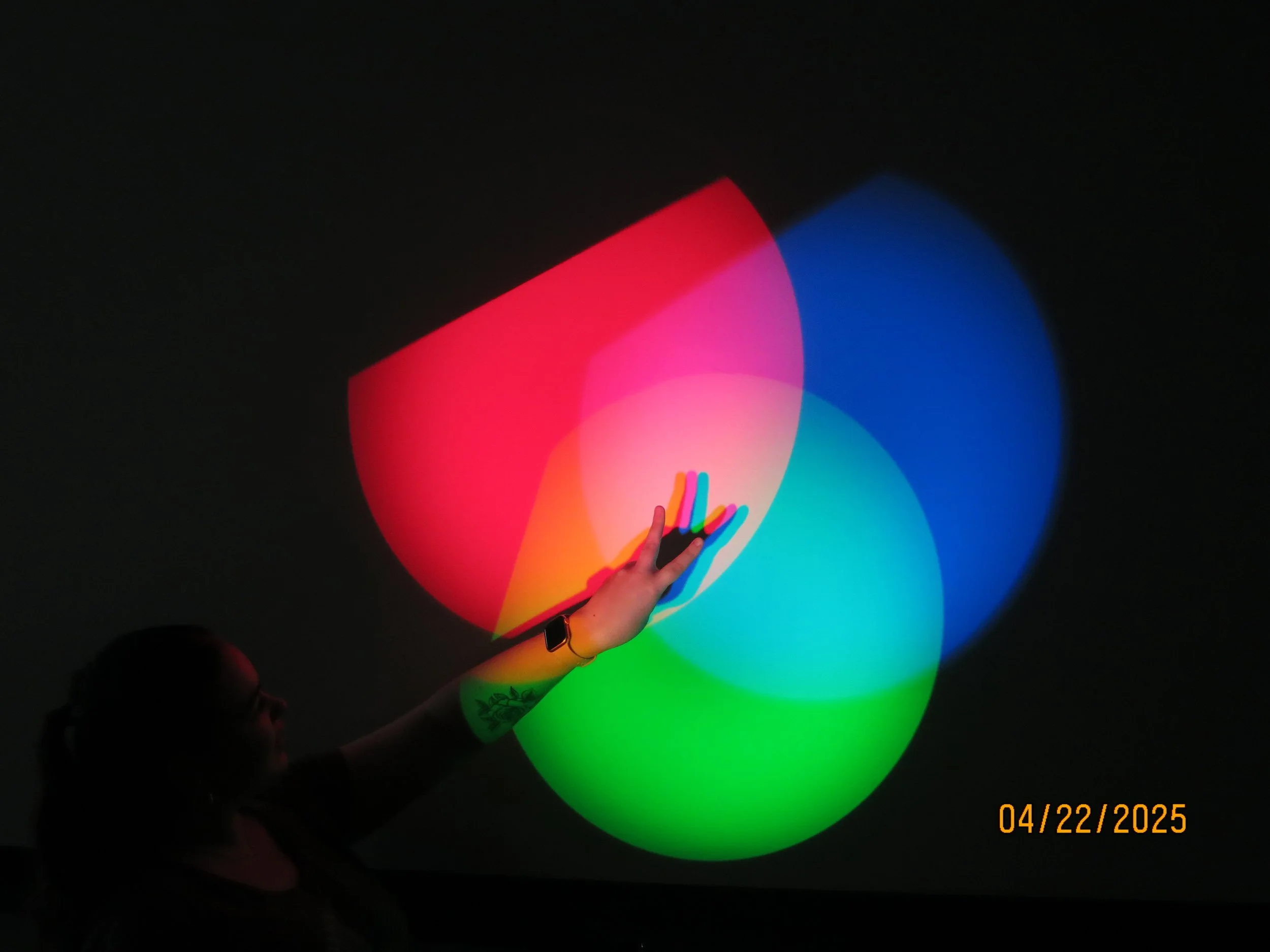
Picture taken in Physics class by Teressa Larkin when we were playing with color and shadows.
Click The Logo for More Info!